
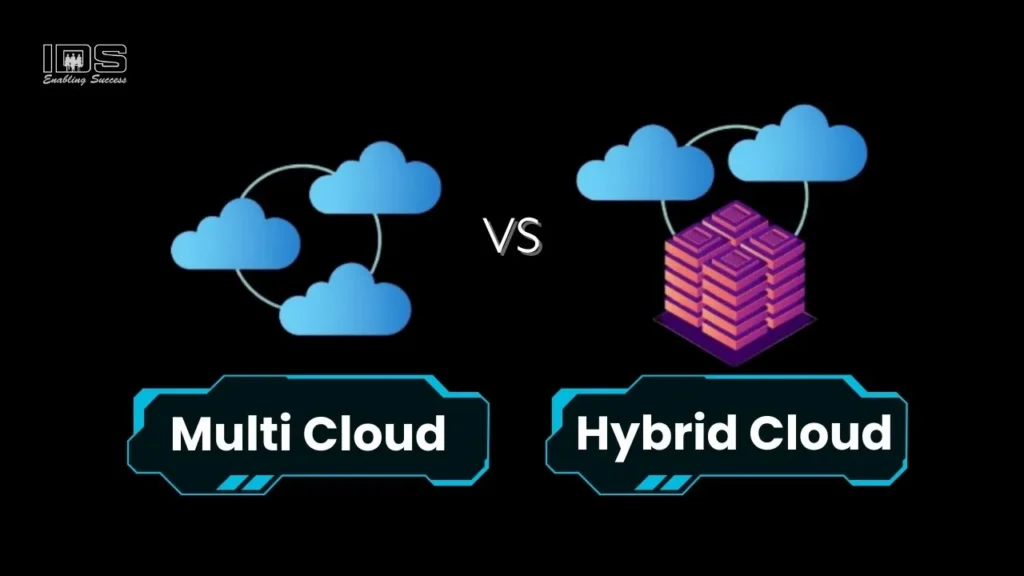
Cloud adoption has been reshaping how companies operate these days. But when it comes to deciding between multi-cloud vs hybrid cloud is one of the most strategic decisions for 2026. While both these approaches promise scalability, resilience, and flexibility, the nuances in their design & execution determine how well they can serve your business goals.
In this blog, we’re sharing the key factors that will help you guide your decision.
Multi-Cloud vs Hybrid Cloud: Understanding the Core Concepts
In a multi-cloud environment, businesses usually utilize more than one cloud provider at the same time to run different kinds of workloads. With this approach, your business can:
- Choose the right type of tools for each task instead of relying on a single provider.
- Reduce downtime risks & improve overall redundancy
- Take advantage of the unique strengths each of the provider offers for different operations
Hybrid cloud combines private & public cloud resources, often linking your on-premises infrastructure with other public cloud services. This cloud approach allows you to:
- Keep sensitive or regulated data on private servers while using the public cloud for workloads that need more flexibility
- Have greater control over data & compliance while still letting you scale operations as needed
When Multi Cloud Structure Becomes a Better Fit
As companies prepare for 2026, the push toward modernization is creating more application diversity than ever. Some teams work with analytics platforms that excel on one provider, while design or engineering workloads may thrive on another. A multi cloud strategy supports this naturally by letting each department choose what suits them without slowing the rest of the company.
You may prefer this path if your business faces unpredictable demand spikes or if your teams experiment with new tools frequently. Multi-cloud adoption trends show that it works well for companies where reliability, rapid scaling options, and pricing flexibility matter deeply. It brings stronger negotiation power too, since you are not tied to one vendor’s ecosystem.
Another advantage emerges when you expand across regions. Different clouds sometimes outperform others in specific geographies, and multi cloud helps you match each workload with the location where it performs best. Mid-sized and large enterprises in sectors such as retail, gaming, media, and global e-commerce often lean toward this model because latency and user experience are directly tied to revenue.
When Hybrid Cloud Delivers More Predictability
Companies that manage regulated information often find hybrid cloud more dependable for long-term stability. Private systems keep sensitive applications in a controlled environment, giving your team the confidence to run workloads that should not transition to the public cloud. The public side then provides flexible capacity during high demand periods, product rollouts, or quick experimentation stages that need scalable resources.
Hybrid cloud tends to attract companies that must maintain dependable performance across sensitive workloads. Finance, healthcare, manufacturing, and public service entities often operate under strict process structures that cannot absorb sudden shifts in how systems are governed. This setup lets your team update infrastructure gradually, keeping long-standing apps stable while you expand the use of public cloud resources on your timeline.
If your internal processes rely on custom systems developed years ago, Hybrid Cloud Adoption in 2026 will keep them operational while letting you adopt cloud innovation gradually. You will get flexibility and control without lifting every workload into the public cloud immediately, which reduces integration work and avoids disruption.
Which is Best for Companies in 2026
The best answer for choosing between multi-cloud vs hybrid cloud emerges when you understand how your organization naturally works. Some move quickly, test new ideas without hesitation, and expand across multiple markets. Those companies often see multi cloud as a comfortable match. Others value predictable systems, structured oversight, strong compliance, and a pacing that lets them modernize with care. That makes your hybrid cloud feel more aligned with the way they operate.
Your final choice becomes far more intuitive once you look closely at your applications, the rules you follow, the level of risk you accept, and the pace your team is ready to embrace.
However, if you are still stuck at choosing one of these options, you can opt for professional cloud consulting services at IDS Tech Solutions. Our experts will guide you by mapping your current infrastructure and the goals you want to achieve.
Frequently Asked Questions (FAQs)
Multi cloud can lead to higher indirect costs if you manage several platforms without a structured plan. At the same time, it can reduce long-term expenses when you match each workload with the provider that delivers better pricing or performance. Hybrid cloud keeps some workloads on private systems, which can lower or raise costs depending on how much premises capacity you maintain.
Finance, healthcare, government, and manufacturing often lean toward hybrid cloud because they run regulated workloads and need consistent performance across systems that cannot change too quickly.
Yes. Many organizations begin with hybrid cloud to keep sensitive systems in a controlled space, then adopt multi cloud once their teams gain confidence with broader public cloud usage. The shift depends on application maturity, team capabilities, and the speed at which you expand your digital operations.
Security depends on where your data lives, how you manage access, and the governance model you follow. Multi cloud spreads workloads across several providers, which adds diversity but requires structured oversight. Hybrid cloud keeps core systems in private environments, giving you more direct control while still letting you use public cloud resources for scalable workloads.
A trusted Cloud Migration Company can help you review your current applications, assess dependencies, and evaluate the level of control you need over sensitive workloads. They guide you in selecting the approach that suits your long-term goals, whether you lean toward a multi cloud structure for flexibility or a hybrid design for predictable operations.